
Week 2: Home Phone

A phone dock for intentional tech use.
Part of my ongoing 10 Bad Weeks design challenge.
Many of us use our phones way too much. However, despite all the discussion about overall screen time, a recent study demonstrated that it is specific types of technology use paired with compulsivity that are a much better indicator of poor mental health outcomes than overall screen time. This insight is making me think about my technology use a little differently, and inspired the design direction for my project this week, focused on a phone dock for intentional technology use.
Click below to see my initial design efforts, and keep reading below if you're interested in understanding more about the design rationale and underlying science.
Further Reading
The Battle for Our Attention
"Our minds are being fracked." That's how Dr. Bennett, a professor of history at Princeton University, describes the all-out war for our attention in the digital age.
The numbers support Dr. Bennett's characterization. For example, recent surveys point to an average daily phone use between 5.25 hrs and 7.5 hours for the majority of American adults and teens (for reference, my average daily phone usage was 5h 10m and 4h 4m over the last two weeks), which would be astounding if it weren't so normalized. Still, we remain glued to our devices despite the research (and our own experiences) that point to the mental health risks associated with excessive tech use.
Addiction by Design
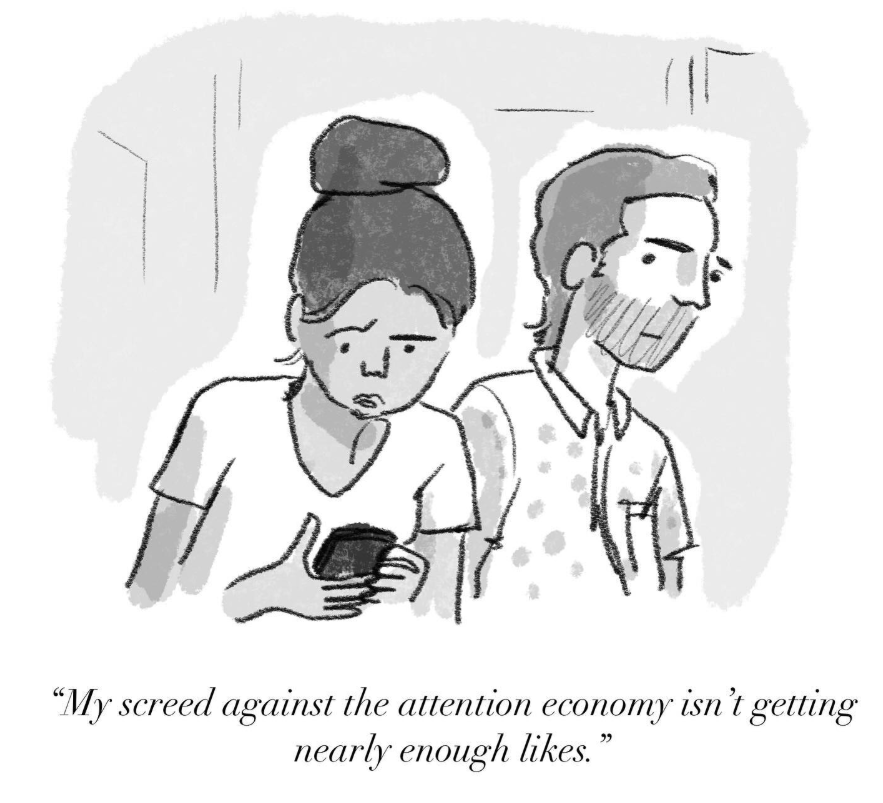
All of this speaks to the power of the behavioral tactics employed by large tech companies to divert and monetize our attention. In her book Addiction by Design, Natasha Schüll outlines how the gambling industry employed deep behavioral science to keep people gambling longer. As it turns out, social media companies copied many of the tactics used in the gambling industry to hook us to our screens. Some of these tactics include:
- Variable rewards and "near wins"
- Rapid initiation and frictionless repeatability
- Entrancing visuals and sounds
- Casino floor plans and increasing the visual presence of slots
Behavioral Activation by Design
A recent study from researchers at Cornell and Columbia University made me ththat addictive screen use, and not total screen time, is a better indicator of depression and suicide risk. In going a level deeper than simple usage statistics, they demonstrated that it is certain types of screen use paired with compulsive use that are a greater predictor of depression, anxiety, and suicide risk.
This doesn't mean that a lot of screen time is beneficial. Still, it's a curious finding, and one that suggests an important (and potentially obvious) point: there are specific types/flavors of technology use that are particularly damaging (compulsive gaming, social media, and porn), especially when the underlying behavioral drivers are related to emotional avoidance and reinforce learned helplessness.
No spam, no sharing to third party. Only you and me.
Member discussion